
What Is the Difference Between Mesothelioma and Lung Cancer?
Lung cancer and mesothelioma are two different cancers that develop in the chest. They grow and spread in unique ways and require their own treatment approaches.
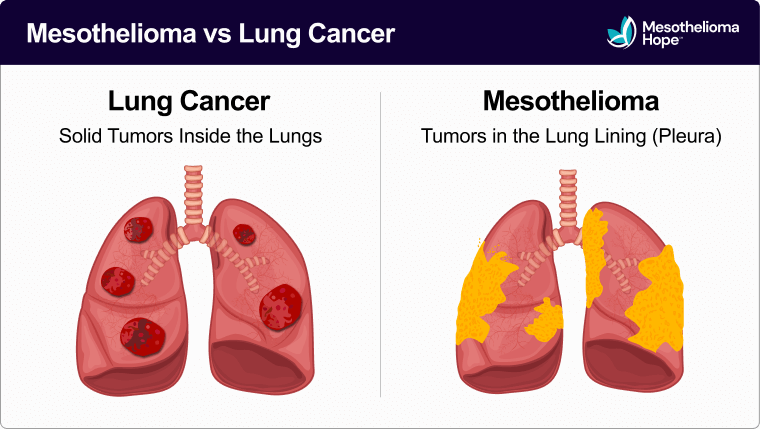
Lung cancer usually grows as one or more solid tumors inside the lungs, each with clear borders. These tumors can spread (metastasize) to other parts of the body, such as the lymph nodes or brain.
Mesothelioma develops differently. It begins as many tiny tumor spots in the thin lining around the lungs or other organs. Over time, these spots can spread and merge, forming a layer of tumors that can wrap around the lung, abdomen, or other areas.
Quick Facts on Lung Cancer vs Mesothelioma
- The most common type of mesothelioma is pleural mesothelioma, which affects the lining of the lungs (pleura).
- The most common type of lung cancer is non-small cell lung cancer.
- Mesothelioma is a rare disease, with about 3,000 cases diagnosed annually in the United States.
- Close to 230,000 Americans are diagnosed with lung cancer every year.
Under a microscope, lung cancer cells and mesothelioma cells look very different. These unique features help doctors make an accurate diagnosis, which is essential for choosing the right treatments and giving patients the best possible outcome.
Is Mesothelioma Lung Cancer?
While mesothelioma can develop in tissues around the lungs, it’s not a type of lung cancer.
Mesothelioma is only caused by breathing in or swallowing asbestos fibers. Once inside the body, these fibers become trapped in organ tissue and cause changes that lead to cancer. Mesothelioma is usually diagnosed 10-50 years after the initial exposure to asbestos.
Lung cancer, on the other hand, has multiple causes and develops differently depending on the underlying cause. Like other types of cancer, lung cancer is a disease in which cells grow out of control and spread to other areas of the body.
There are two types of lung cancer: small-cell lung cancer and non-small cell lung cancer. Smoking is the main cause of lung cancer, though researchers are finding that far more cases are caused by asbestos exposure than was previously thought.
Get a clearer understanding of mesothelioma vs lung cancer in our Free Mesothelioma Guide, which covers symptoms, diagnosis, and treatment options.
Symptoms of Lung Cancer and Mesothelioma
Mesothelioma is sometimes mistaken for lung cancer because both diseases have similar symptoms. Additionally, these symptoms usually appear when either cancer is at an advanced stage.
Common symptoms of mesothelioma and lung cancer include:
- Chest pain
- Coughing up blood
- Difficulty breathing or swallowing
- Fluid buildup (pleural effusion)
- Persistent cough
- Shortness of breath
- Swelling in the face
- Tiredness
- Unexplained weight loss
In most cases, patients won’t be able to distinguish between the symptoms of lung cancer and mesothelioma on their own. The only sure way to know what type of cancer you have is to get an examination and diagnosis from your doctor.
Diagnosing Mesothelioma vs Lung Cancer
Because mesothelioma and lung cancer share certain symptoms, getting an accurate diagnosis is critical. Doctors will look at medical records, do a physical exam, and order tests to determine a mesothelioma diagnosis. This is an important time to share with your doctor whether you have a history of smoking or asbestos exposure.
Tests for diagnosing mesothelioma vs lung cancer include:
- Biopsies of the lung or chest wall
- Bloodwork
- Imaging tests (chest X-rays, CT scans, MRI scans, and PET scans)
- Sputum cytology (microscopic exam of phlegm to look for cancer cells)
How cells appear under a microscope tells doctors what type of cancer is present. In addition to examining individual cells, doctors may look at the tumors. Scattered tumor-like nodules that form a sheath around the lung are a sign of mesothelioma.
The only way to make a definitive diagnosis of mesothelioma is with a biopsy. Since lung cancer is more common, it must be ruled out first. In some cases, mesothelioma is misdiagnosed as lung cancer, especially when the doctor doesn’t have experience with mesothelioma.

“With lung cancer, we talk about small cell and non-small cell lung cancer, and non-small cell lung cancer is much more favorable. Similarly, with mesothelioma, we have epithelial cell type and sarcomatoid, which is a much more aggressive form.”
2026 Update on Diagnosing Lung Cancer vs Mesothelioma
Scientists continue to study the best way to diagnose malignant pleural mesothelioma and differentiate it from lung cancer and other respiratory diseases.
For example, recently published research shows that infrared spectroscopy (a way to identify chemical substances using infrared radiation) can potentially identify pleural mesothelioma using blood serum and distinguish it from lung cancer.
Other researchers are studying the use of tumor markers and hyaluronic acid (a natural substance in eye and joint fluid) to differentiate the two types of cancer.
An article published in Radiology Case Reports analyzed a case involving a 71-year-old man who sought medical care for shortness of breath related to a pleural effusion. Doctors thought he had mesothelioma at first, but a biopsy revealed he really had lung cancer.
“Although this patient had the classical history and imaging findings of mesothelioma, histology is always required for confirmation of diagnosis.”
− Radiology Case Reports study authors
Treating Mesothelioma vs Lung Cancer
Although the two cancers have similar symptoms that treatment aims to alleviate, treatment plans for lung cancer and mesothelioma are based on how the cancer develops and spreads. Both cancers usually require two or more types of treatment, which is called multimodal therapy.
Common treatment options for mesothelioma and lung cancer include:
- Surgery: If the cancer is caught before it has spread too far, doctors may be able to remove the tumors.
- Chemotherapy: These drugs travel throughout the body to destroy cancer cells.
- Immunotherapy: This newer treatment stimulates the immune system to identify and kill cancer cells.
- Radiation: Radiation therapy can shrink tumors to help relieve symptoms.
- Targeted therapy: These drugs work differently from chemotherapy medications and typically have less severe side effects. They are often used for advanced forms of cancer, either alone or with chemotherapy.
- Palliative care: These treatments can help improve quality of life and relieve symptoms. Palliative care may be the only treatment option available for late-stage mesothelioma or lung disease, but it can be extremely helpful at any stage.
If you’re exploring treatment options or need guidance on what comes next, our Free Doctor Match can connect you with specialists who treat mesothelioma and asbestos-related lung cancer.

Compensation Options for Mesothelioma and Lung Cancer
Patients diagnosed with mesothelioma may be eligible for compensation from lawsuits, asbestos trust funds, grants, insurance, or VA benefits. Because mesothelioma is caused by exposure to asbestos, patients can pursue compensation against the corporations that used this dangerous substance and put people at risk.
Mesothelioma compensation options include:
- Mesothelioma lawsuits: Filed against negligent manufacturers of asbestos-containing products, these typically award patients $1 million or more.
- Asbestos trust funds: There’s over $30 billion available across dozens of trusts set up by bankrupt corporations to help people hurt by asbestos. This compensation can be accessed without filing a lawsuit.
- VA benefits: Veterans with mesothelioma usually receive monthly VA disability compensation worth $4,158.17 per month, as well as free or inexpensive health care, and additional payouts.
Lung cancer patients who think their disease may have been caused by asbestos exposure may also qualify for compensation through asbestos trust fund claims, lawsuits, or VA benefits. Even if you aren’t aware of asbestos exposure in your past, certain tests may be able to tell if your cancer was caused by asbestos.
Getting compensation can help pay for treatment costs and other unexpected expenses after a diagnosis of mesothelioma or lung cancer. Call (866) 608-8933 now to find out your eligibility for compensation.
Get Support for Asbestos Lung Cancer and Mesothelioma
Diagnosing mesothelioma can be difficult, especially without an experienced doctor who knows what to look for. Getting a second opinion on mesothelioma or lung cancer can make all the difference in your treatment plan and future health.
The team at Mesothelioma Hope can help you:
- Understand your diagnosis
- Meet with a specialist for a second opinion
- Explore your treatment options
- Get financial support for expenses
Whether you already have a diagnosis or are just starting your journey, our nurses and Patient Advocates are here for you. Give us a call at (866) 608-8933 or get our Free Mesothelioma Guide to learn more.
Mesothelioma vs Lung Cancer FAQs
What is the difference between lung cancer and mesothelioma?
Mesothelioma is a type of cancer that grows in the mesothelium, the thin tissue that covers the lungs and other internal organs. Lung cancer, however, develops inside or on the lungs.
Both cancers may share similar symptoms, but they affect the body in different ways. This is why it’s important to see a specialist who can make an accurate diagnosis.
Get a second opinion on your lung disease, or get help finding treatment for your cancer, with our Free Doctor Match service.
What type of lung cancer is mesothelioma?
While mesothelioma can develop in tissues around the lungs, it’s not a type of lung cancer. Pleural mesothelioma, which forms in the lung lining, is the most common type of this cancer (though it can also develop in the abdomen, heart, or testes).
Even though mesothelioma and lung cancer can feel similar for patients, the diseases themselves behave differently and are managed in different ways.
Is pleural mesothelioma lung cancer?
No. Pleural mesothelioma is a cancer of the lining of the lungs, not the lung itself. It has similar symptoms to lung cancer, like persistent coughing, chest pain, difficulty breathing, and shortness of breath, but isn’t technically lung cancer.
Can you have mesothelioma and lung cancer?
It’s rare to have both mesothelioma and lung cancer, but it has happened, according to Respiratory Medicine Case Reports.
Exposure to asbestos can cause several types of cancers and other illnesses, so it’s important to pay attention to your health and see your doctor if you’re having any respiratory symptoms. For help finding a mesothelioma specialist or learning your treatment options after a diagnosis, contact our team today.
Is mesothelioma non-small cell lung cancer?
Mesothelioma is not the same as non-small cell lung cancer. Mesothelioma develops in the lining around the lungs, not in the lung tissue itself. It’s caused by asbestos exposure and behaves differently from typical lung cancers, which is why doctors classify it as its own separate condition.
Non-small cell lung cancer starts inside the lungs and is the most common form of lung cancer. It has different risk factors, treatment approaches, and outcomes compared with mesothelioma. Even though both conditions affect the chest and can cause similar symptoms, they are medically distinct diseases.



 How We Can Help
